An event is a deadline that cannot move. When doors open, vehicles
line up, participants arrive or executives take their seats, every
operational detail needs to be ready. That is why complex events require
more than a ticketing system and more than a generic task list. They
need event project management software.
Event project management software is a connected workspace for
planning, coordinating and delivering an event from initial concept
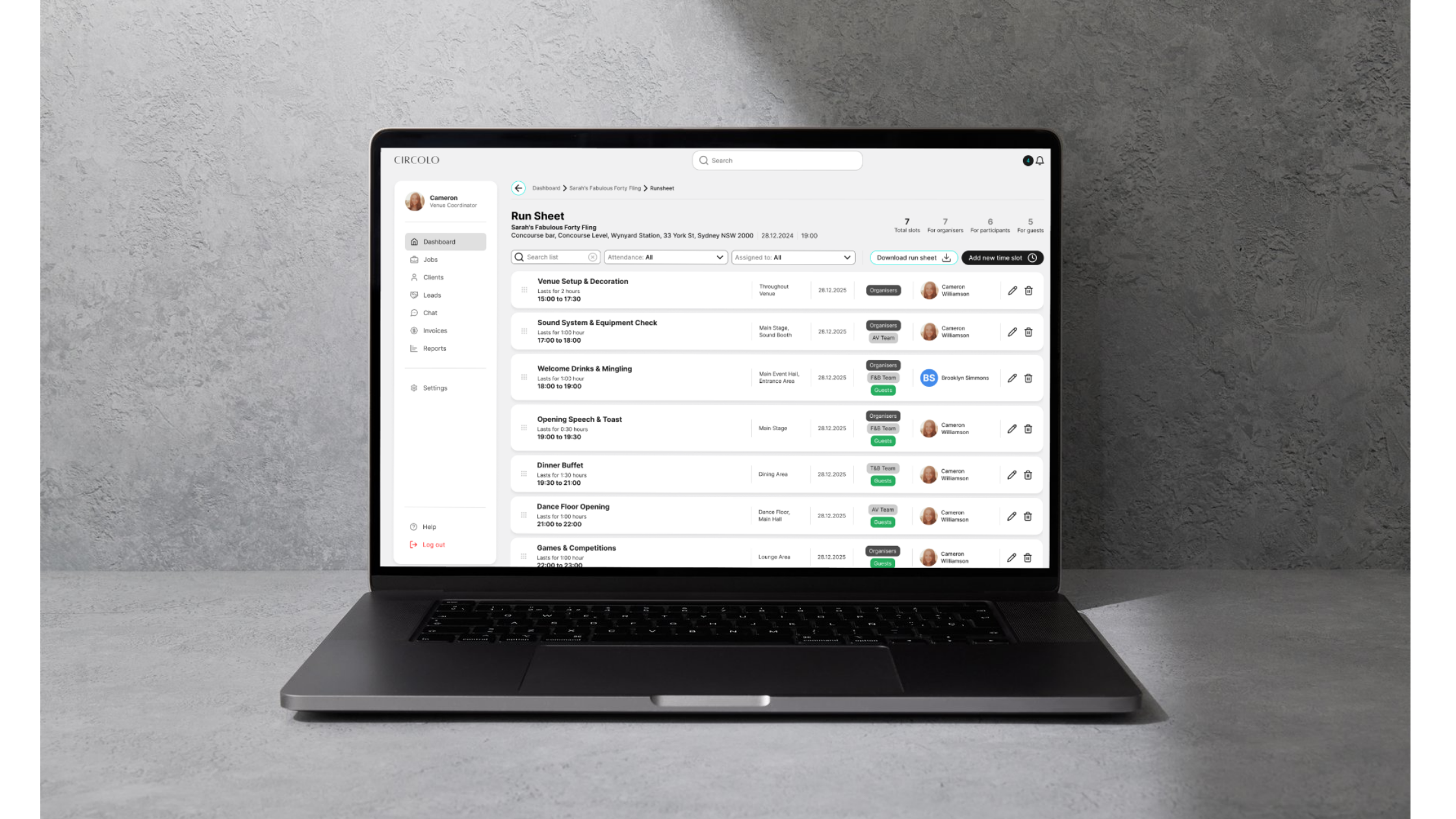
through to on-the-day operations. It brings together the work that often
sits across spreadsheets, inboxes, shared drives, registration tools and
printed runsheets. Depending on the event, that can include tasks,
budgets, suppliers, guest or participant records, tickets, forms,
documents, schedules, runsheets and check-in.
The distinction matters. Ticketing software is primarily designed to
process a transaction: create a ticket, take payment and issue
confirmation. A conventional project management tool is designed to
organise work: assign tasks, set deadlines and track progress. Both are
useful, but neither necessarily connects the people attending an event
with the operational work required to deliver it.
Event project management closes that gap. If a participant changes
category, a guest submits a dietary requirement or a supplier alters an
arrival time, the relevant information remains attached to the event
rather than becoming another message for somebody to reconcile
manually.
One operational view of the
event
The practical value is control. Event teams need to know what is
complete, what is missing, who owns the next action and what must happen
on the day. A connected platform creates a shared source of truth so
that planners, suppliers and delivery teams are not working from
different versions of the same information.
That is important because coordination itself consumes a significant
amount of the working day. Microsoft’s 2023 Work Trend Index found that
the average Microsoft 365 user spent 57% of their time communicating and
only 43% creating. The study also found that 68% of people lacked enough
uninterrupted focus time. For event teams, repeated status emails,
spreadsheet checks and requests for missing details can crowd out
higher-value work such as improving the program, strengthening
partnerships or developing the guest experience.
Event project management software can reduce that operational drag by
making workflows visible and repeatable. A previous event can become the
starting point for the next one. Tasks, runsheets, supplier processes
and forms do not have to be rebuilt from scratch each time.
Designed for
complexity, not just attendance
The strongest use cases are events with multiple stakeholders,
detailed data requirements and real on-the-day pressure. Motorsport
events may involve licences, vehicle details, waivers, officials and
medical information. Active events may need emergency contacts, guardian
consent, accessibility notes and wave allocations. Corporate teams may
be coordinating RSVPs, budgets, venues, suppliers, speakers and
executive requirements across several events at once.
In each case, the goal is broader than selling admission. It is to
collect the right information, coordinate the right people and make the
event feel organised from first contact to check-in.
That leads to four practical outcomes: lower risk, less manual
administration, more capacity to deliver revenue-generating events, and
a better guest or participant experience. Faster check-in, fewer missing
forms and clearer responsibilities are not simply efficiencies behind
the scenes; they are part of how attendees judge the event.
Event project management software therefore acts as the operating
system for delivery. Circolo is built around this role, connecting event
planning and on-the-day execution in one workspace. For teams outgrowing
spreadsheets and disconnected tools, that connection is the difference
between tracking an event and truly managing it.